


At Centro per l’Arte Contemporanea Luigi Pecci in Prato, Italy’s first exhibition confronting HIV-AIDS stands as testament to what happens when a culture refuses to remember. VIVONO: Art and Feelings, HIV-AIDS in Italy. 1982-1996, curated by Michele Bertolino, brings forward work by Italian artists whose lives and practices were shaped by the crisis—names largely absent from the country’s cultural conversation despite decades of international discourse. The title, translating to “they live,” insists on presence where silence has prevailed.
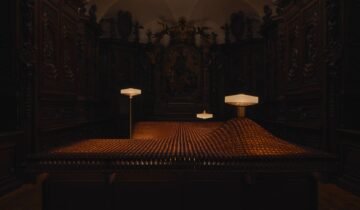
The exhibition spans 1982 to 1996—the year of Italy’s first recorded AIDS case and the introduction of HAART therapies in Vancouver. Nine rooms hold painting, sculpture, photography, video, and poetry, organized not by chronology but by themes: stigma, care, time, celebration, and provocatively, “shit.” Activist Valeria Calvino proposed the term, and in the exhibition’s accompanying book she expands on its significance: “The 1980s were shitty years… they digested and discarded everything that the 1970s had been… the years of marches, collectives, self-awareness groups, counterculture…” Much of the work on view was made against this backdrop of cultural erasure and isolation. Worktables throughout the exhibition display archival pamphlets, Moschino and Benetton campaigns, activist posters—evidence of a time when culture fought back with creativity and visibility.
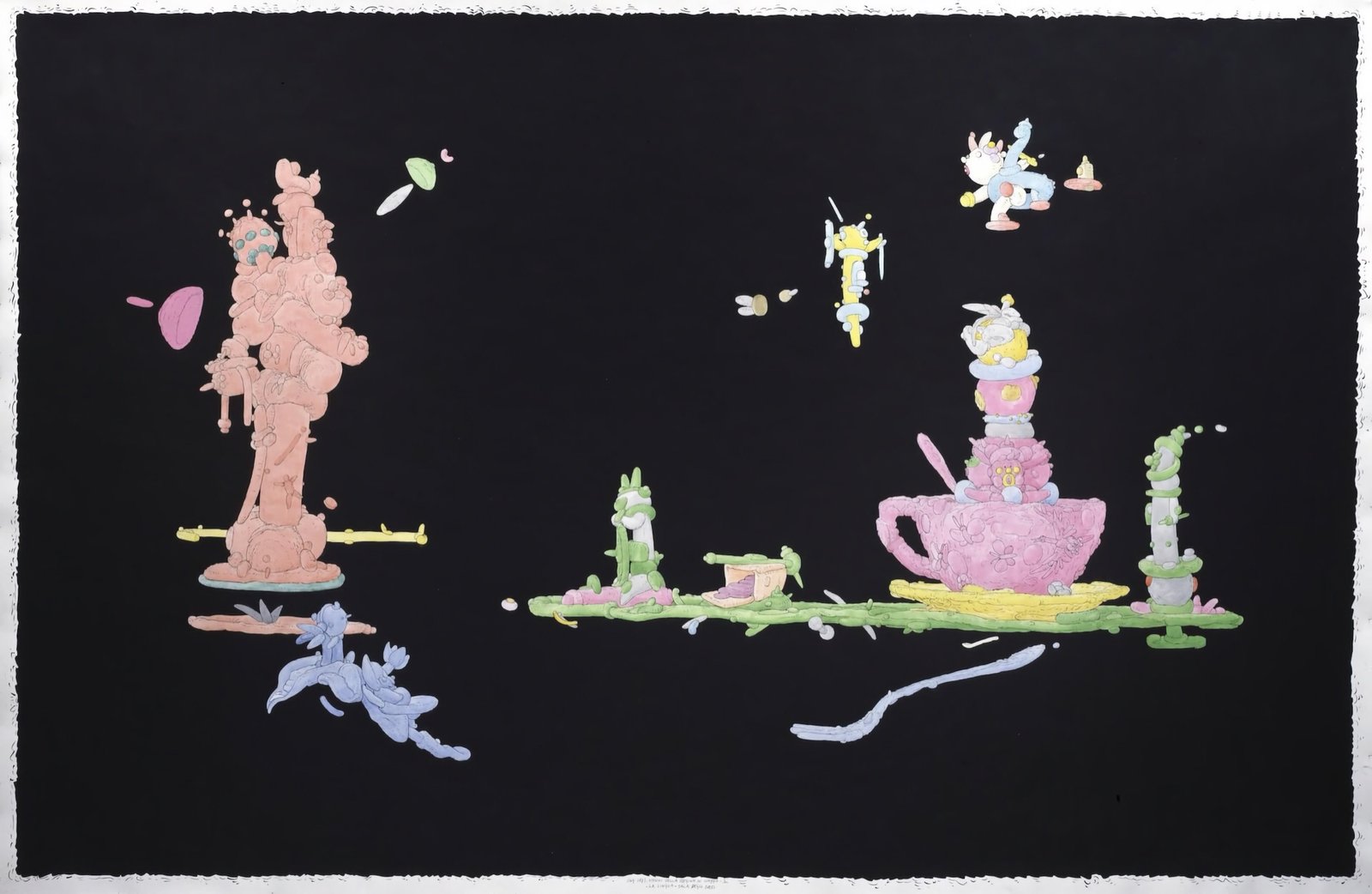
tempera on canvas paper
Monographic spaces dedicated to Nino Gennaro, Patrizia Vicinelli, and Francesco Torrini anchor the show. Gennaro’s room, modeled after the living space he shared with his chosen family until his death in 1995, features four off-white sofas positioned in each corner—comfort even in retreat. As his words project onto surrounding walls, visitors sit surrounded by his vision of home, described in his personal notes from the 1980s: “a place to make mistakes but also to get things right, a place to heal but also to get sick… to die but also be reborn, a place where everything is allowed…”
Time offers both comfort and betrayal. Medical advances now allow people to live full lives with HIV, prevention tools exist, and for many, the crisis feels distant. Yet conversations have faded. Education has stalled. In 2025, the Trump administration deliberately refused to acknowledge World AIDS Day on December 1st—the first time an American government has openly stigmatized the moment designed to honor lives lost and continue the fight. Retrograde moral ideologies, once thought defeated, rise again with emboldened hostility. When public discourse retreats, when governments turn silent, the vulnerability returns.
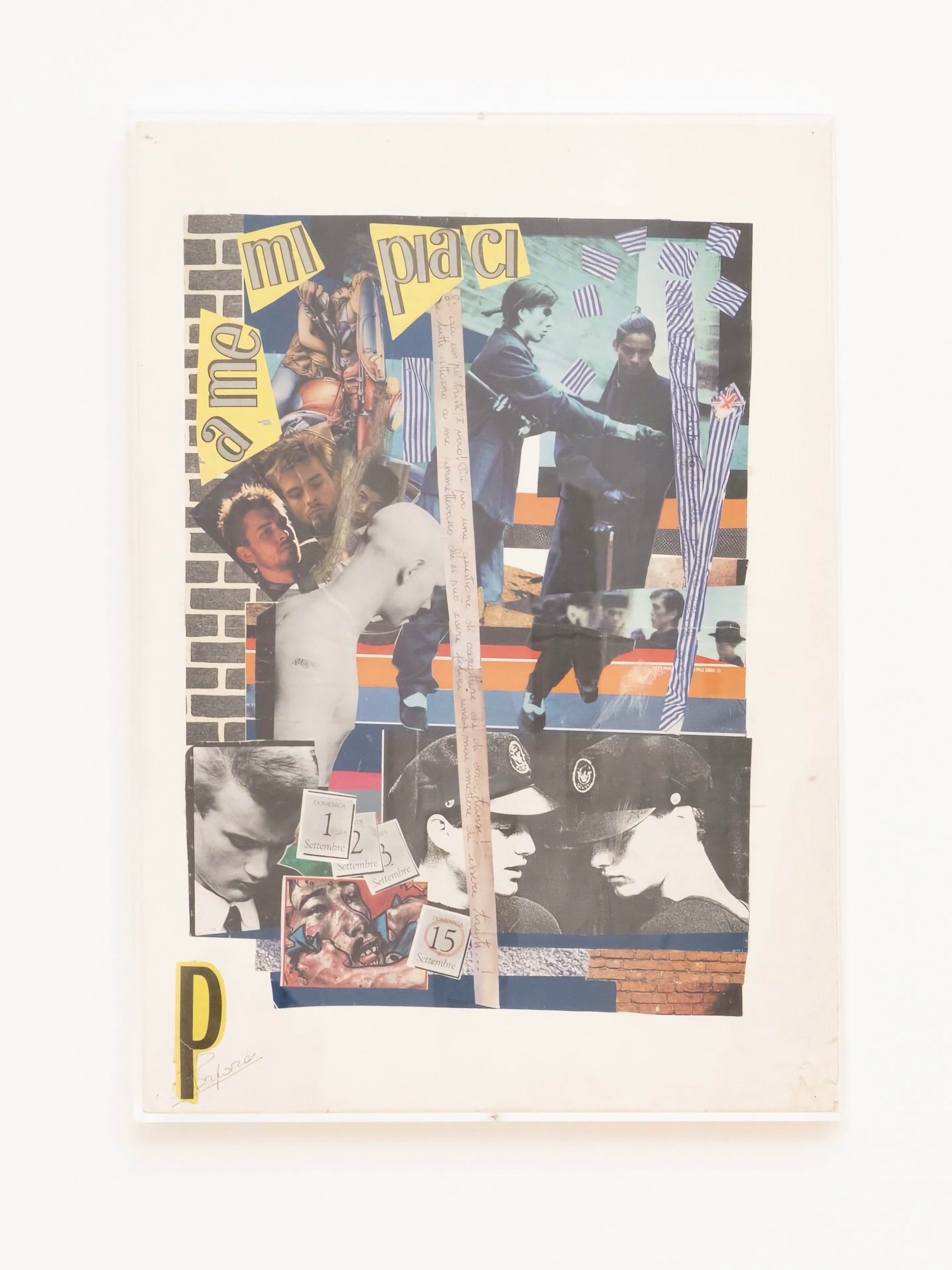
mixed media on paper
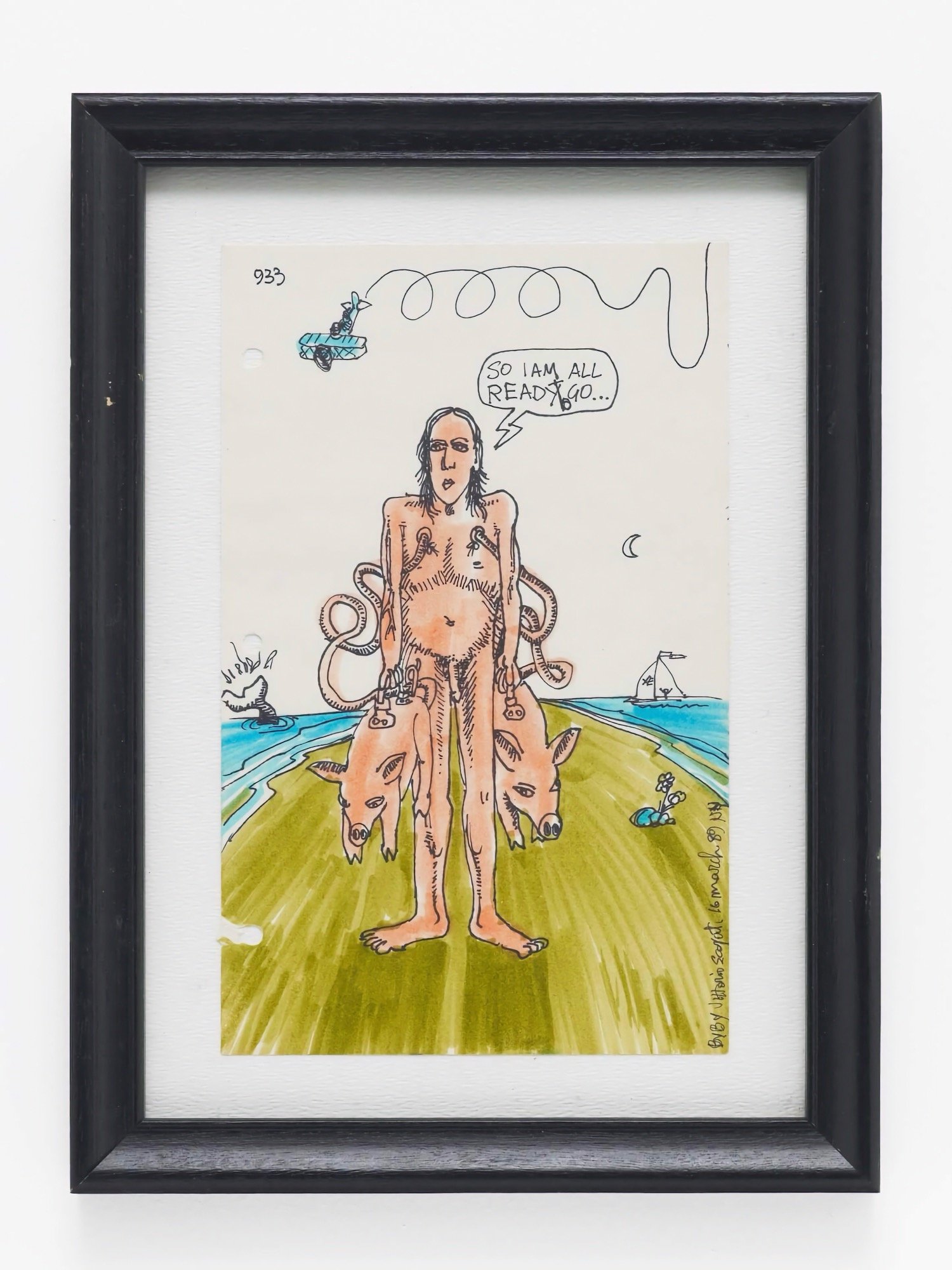
pen and markers on paper
Art, however, refuses to forget. Bertolino describes the show as “constructed because of love,” a collective effort to build memory where none formally existed. The Felix Gonzalez-Torres Foundation supports the exhibition, extending the legacy of an artist whose work transformed grief into beauty and insistence.
Italy’s great statues and cathedrals stand as witnesses to histories their makers could not have foreseen. VIVONO joins that lineage. When the world forgets, art remembers. When conversations stop, the work remains—unapologetic, necessary, alive.
VIVONO: Art and Feelings, HIV-AIDS in Italy. 1982-1996 is on view at Centro per l’Arte Contemporanea Luigi Pecci, Prato, through March 1, 2026.

self-portrait
Photo | Marco Sanna · “STOP AIDS, PREVENZIONE”



 No products in the cart.