

There is a long-standing belief among architects that a space is never truly finished until the light is right. Not the light that illuminates, merely—but the kind that shapes mood, flatters the human form, and quietly signals that someone has thought deeply about the conditions of living. It is no coincidence, then, that Aesop—a brand that has always understood its stores as architecture, its products as objects—has chosen this precise terrain for its most considered move yet. Each Aesop outpost is a singular built work, shaped by the materials, history, and sensibility of its locale, and conceived in collaboration with architects of genuine distinction—Snøhetta, Sabine Marcelis, Jo Nagasaka among them. The stores have always been the argument. Aposē is its natural extension.
At this spring’s Salone del Mobile in Milan, Aesop unveiled Factory of Light, an installation conceived by long-time collaborator Rodney Eggleston of Sydney’s March Studio. Set within the soaring, Baroque interior of the 15th-century Santa Maria del Carmine church, the work introduced Aposē—the brand’s first foray into residential lighting—with characteristic restraint and atmosphere. Three lamps, presented in table, floor, and pendant variations and imagined in differing heights, rose above an undulating field of thousands of repurposed 50 ml fragrance vials, the only other source of illumination in the darkened nave. As Eggleston described it, the bottles acted as mediators between the lamps and the space—gathering, dispersing, and giving dimension to the light above them.
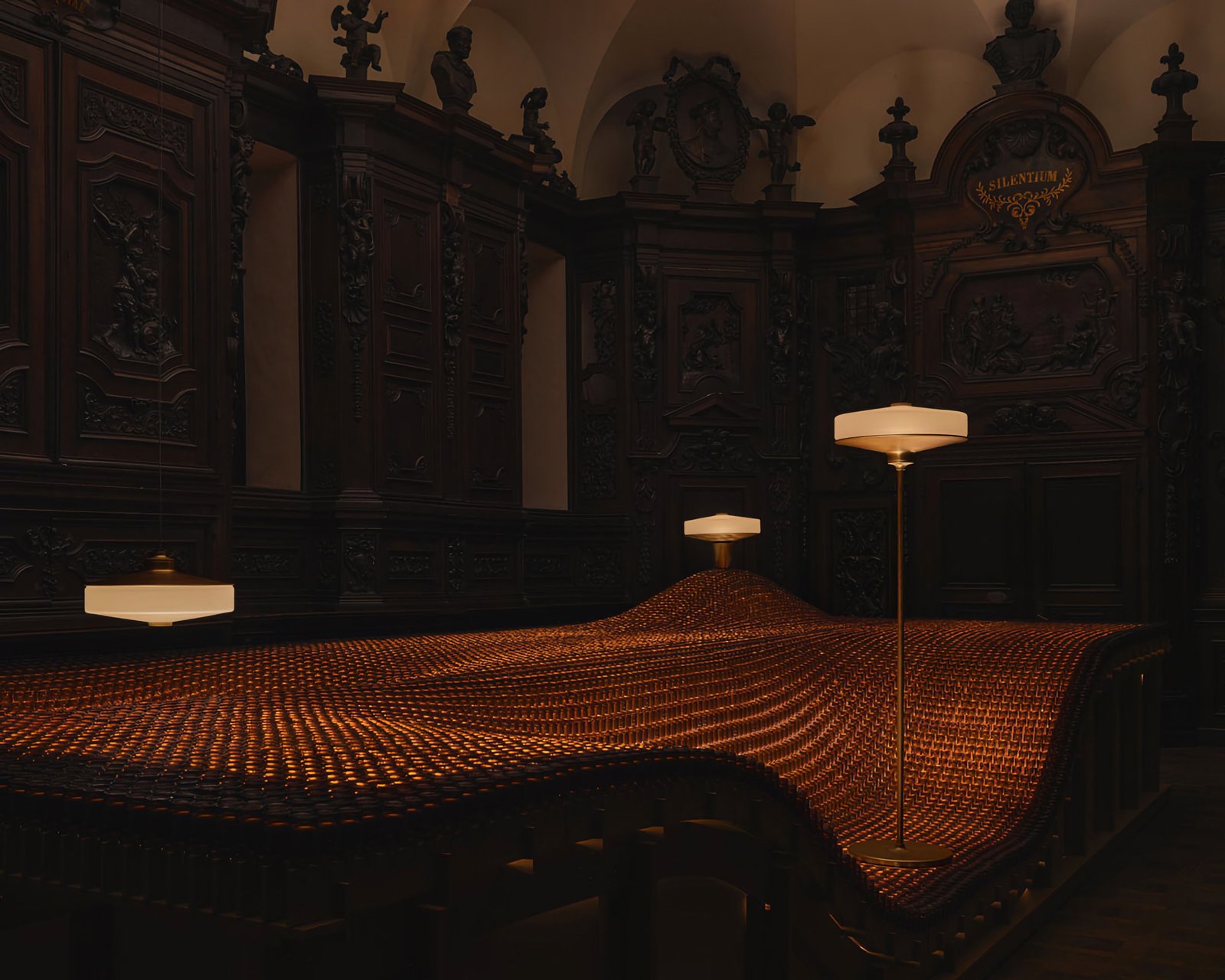
Aposē is a handcrafted table lamp conceived by Aesop’s own in-house architects and produced in a limited edition of 500. Its sand-cast brass base was forged in a German foundry operating since 1874, while its mouth-blown glass crown was shaped by glassblowers in the Veneto—molten at 1,500°C, breathed into form through movements both precise and intuitive. The resulting glow: a warm 2,400-kelvin amber, diffused through softly frosted glass. Intimate. Enveloping. Designed, as Aesop describes it, to bathe domestic interiors in calming, subtle light—to illuminate every skin.
The connection to the brand’s broader ethos runs deeper than aesthetics. In a series of recessed alcoves within the installation, video sequences documented the making of each component—the meticulous handwork of foundry, lathe, and glassblower—drawing an unmistakable parallel between the labor of craft and the labor of care. A shared scent diffused across the installation drew both halves into coherence, the lamp fully assembled and transitioning from workshop to home. Outside, the church courtyard was wrapped in a printed scaffolding structure—a nod to the European tradition of trompe l’oeil tarpaulins that mask buildings under restoration, facades-in-progress presented as already whole.
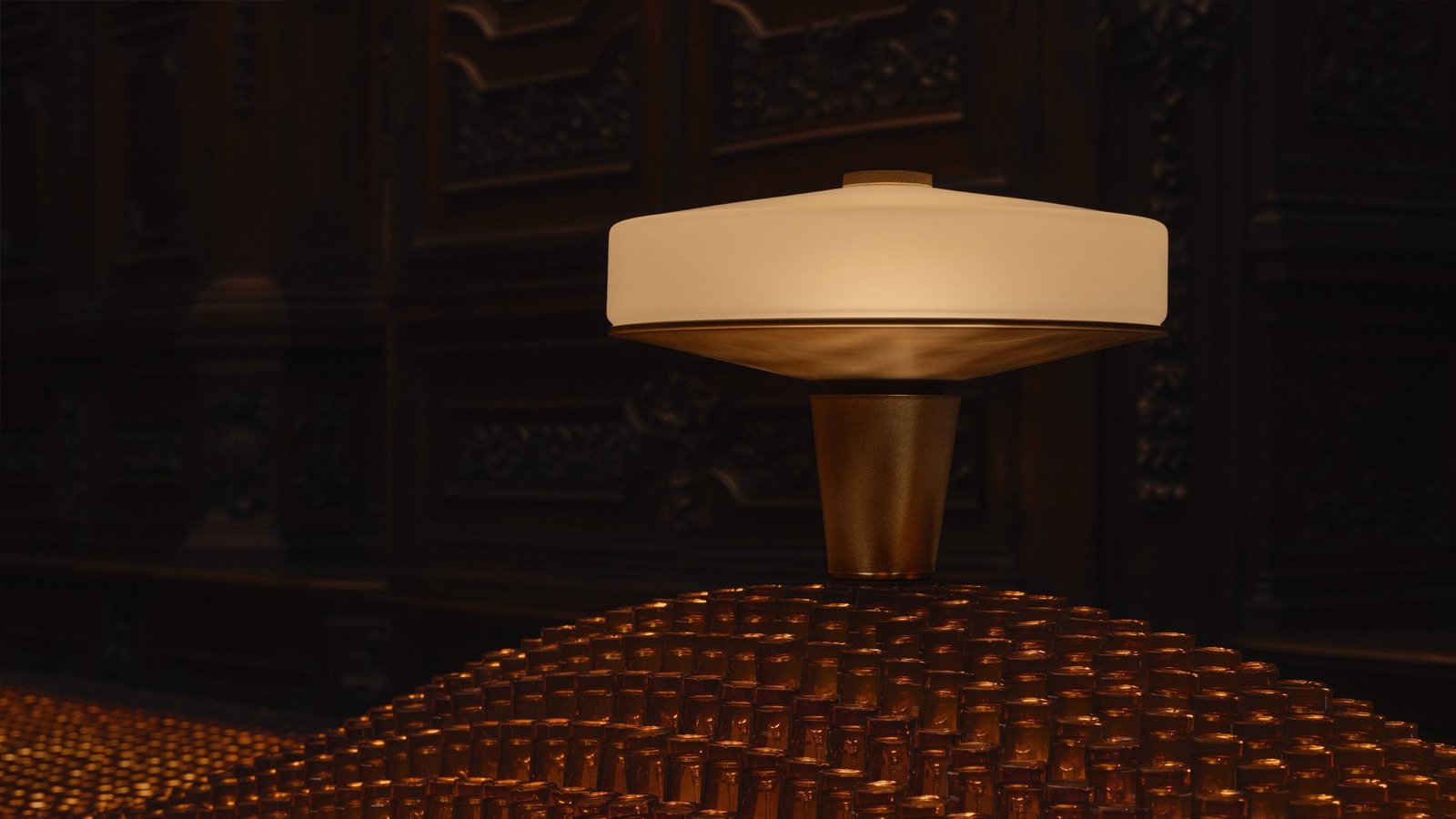
What distinguishes Aposē—and the installation that heralded it—is the refusal to treat beauty and function as separate concerns. Good light has always been the domain of the architect and the designer; good skincare, the domain of the formulator and the aesthetician. Aesop has long understood that these disciplines share more than a vocabulary. Both are ultimately concerned with how the body inhabits space—how it feels to exist within a room, to stand in front of a mirror, to be seen. Aposē does not simply sit on a table. It proposes a quality of presence. And in doing so, it extends Aesop’s long argument that to care for your environment is to care for yourself.
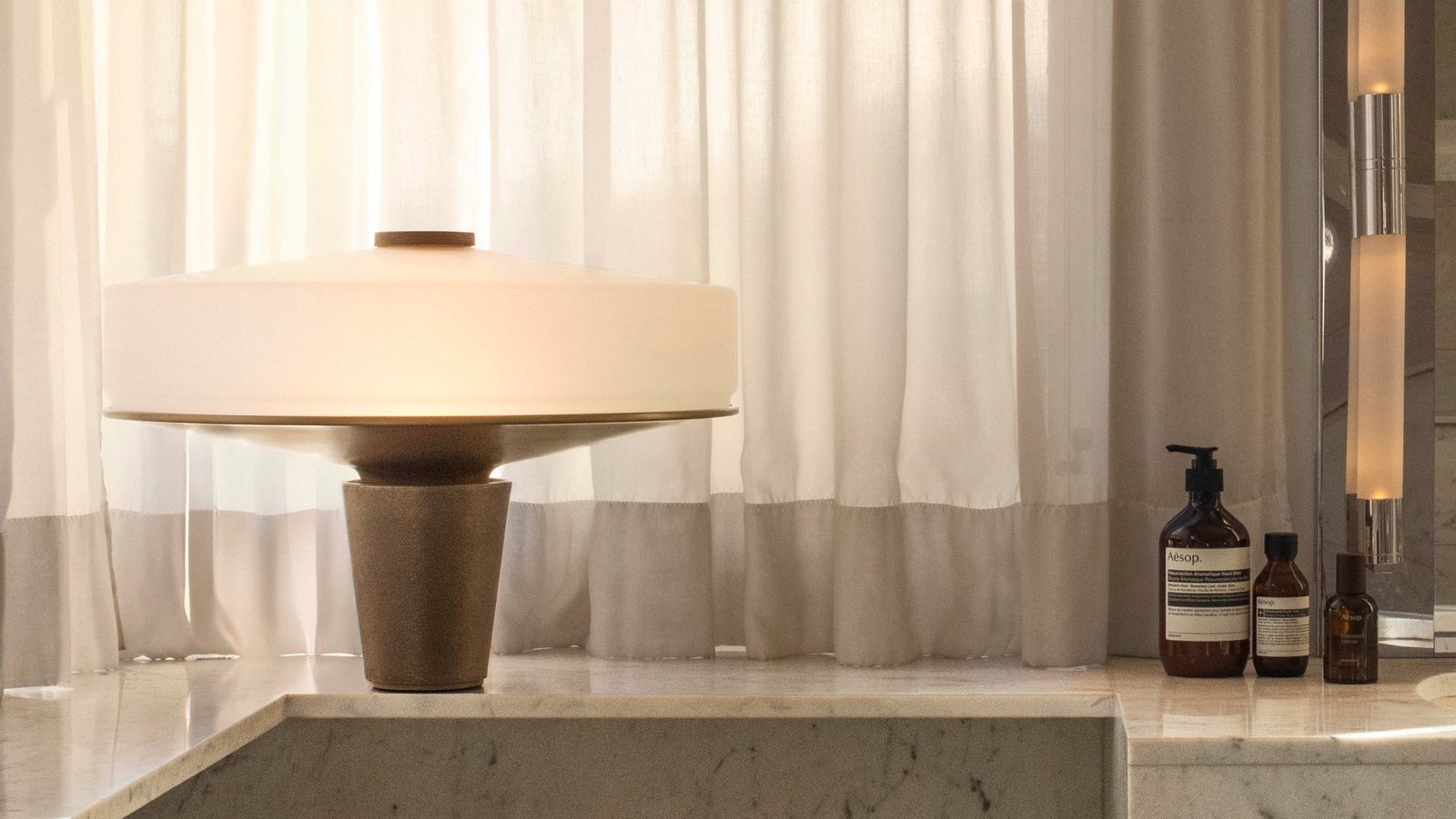
The Aposē table lamp is available exclusively at apose.aesop.com, with European deliveries beginning in June 2026. Additional information on Aesop’s presence at Salone del Mobile can be found at aesop.com.
Photos | Ludovic Balay
Video | Aesop



 No products in the cart.