

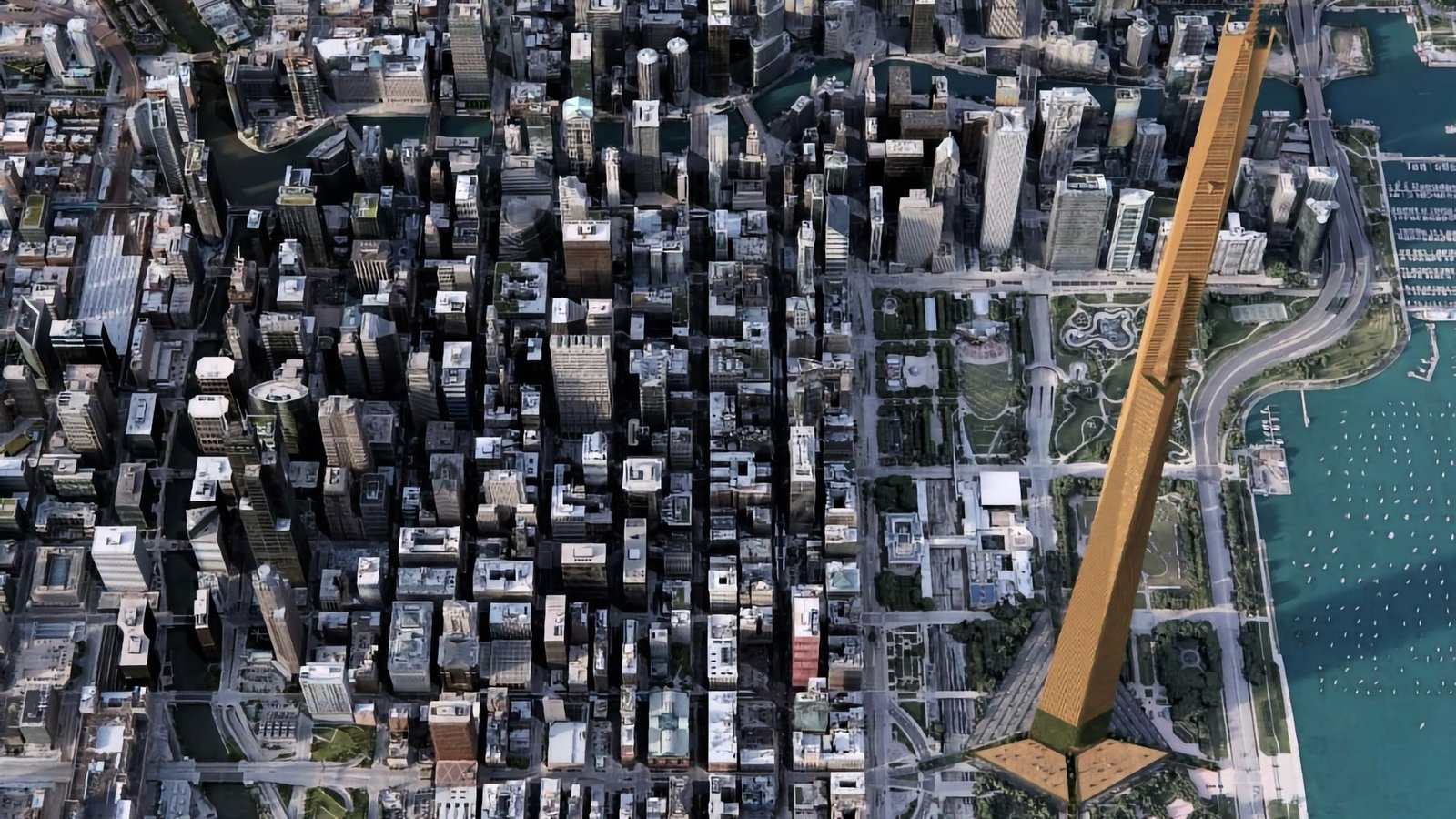
Chicago’s skyline is a web of ambition, each new structure echoing stories of vision and innovation. In recent months, crews have begun construction in the long-vacant pit once planned for Calatrava’s Chicago Spire—a site that, for years, seemed a symbol of stalled aspiration. This activity stirs memory of another, even more audacious dream that never pierced the clouds: Frank Lloyd Wright’s design for The Illinois, a mile-high skyscraper conceived as the city’s crowning monument to possibility.
By 1956, Frank Lloyd Wright was the world’s most celebrated organic architect, renowned for mirroring nature’s harmony in steel and stone. Approaching ninety, Wright’s star had long illuminated American architecture through the Prairie School and masterpieces like Fallingwater and the Guggenheim Museum in New York. The Illinois marked his boldest leap—a vision of not merely buildings, but cities redefined, an entire metropolis drawn upward from the ground.
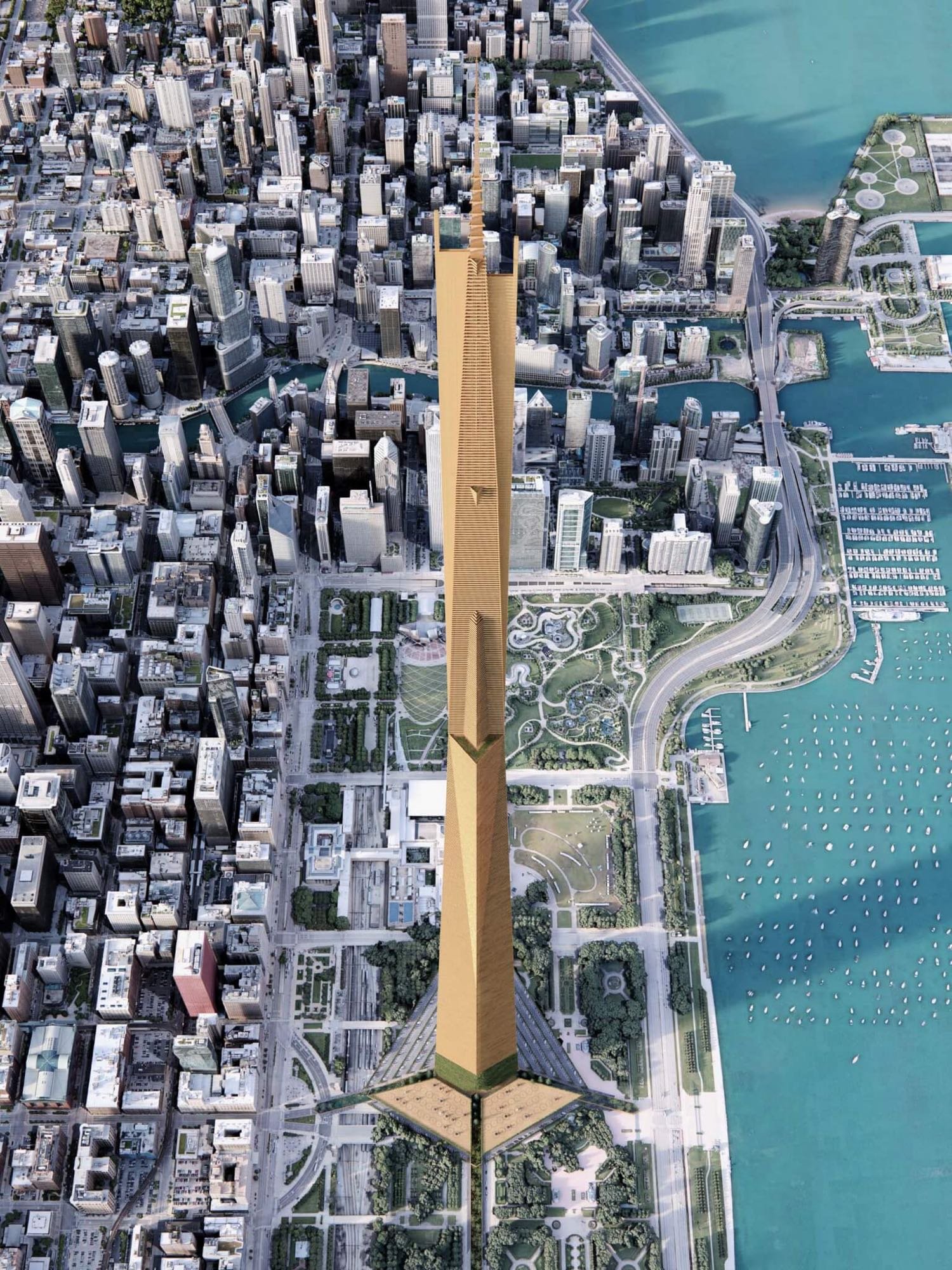
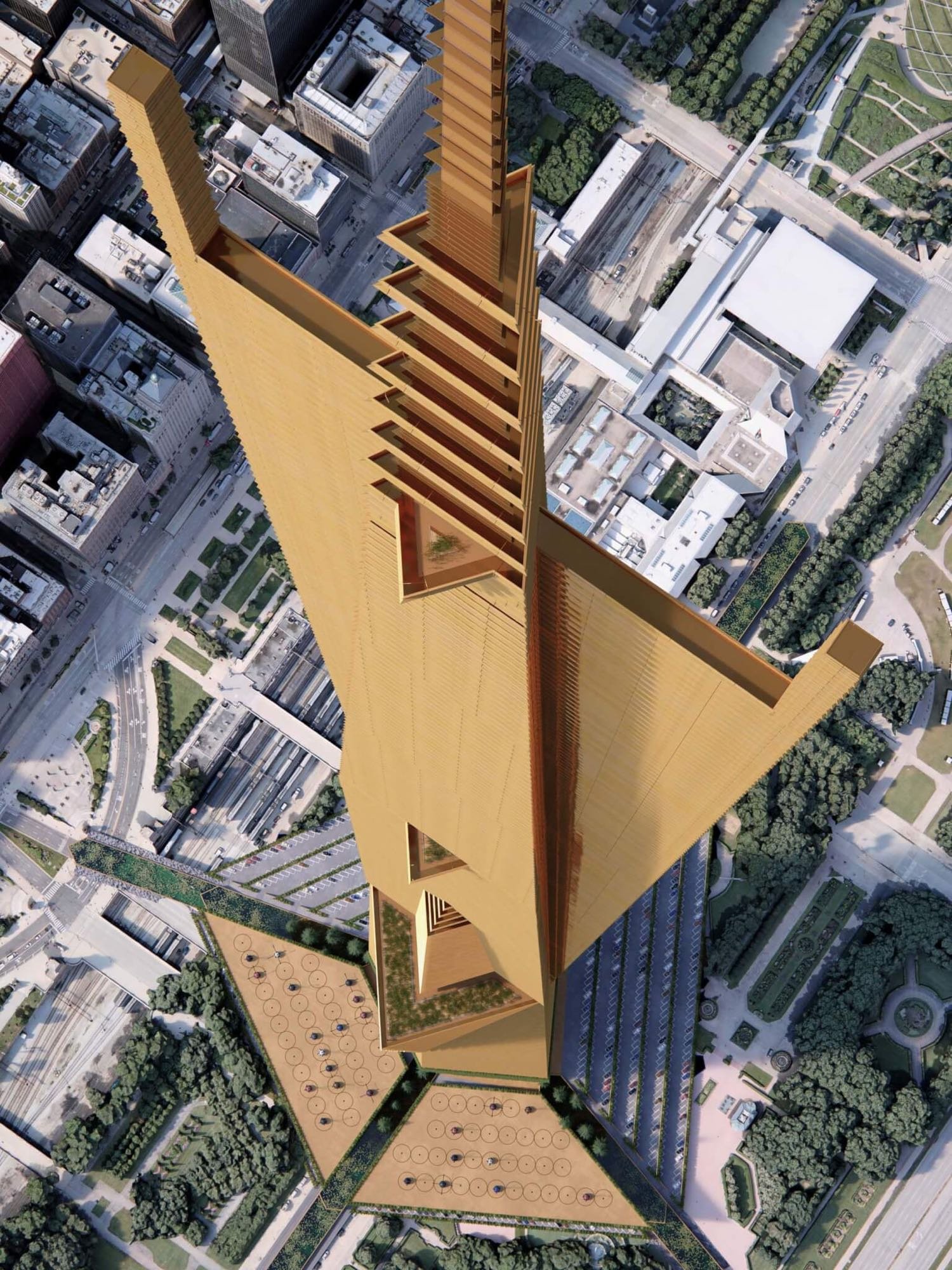
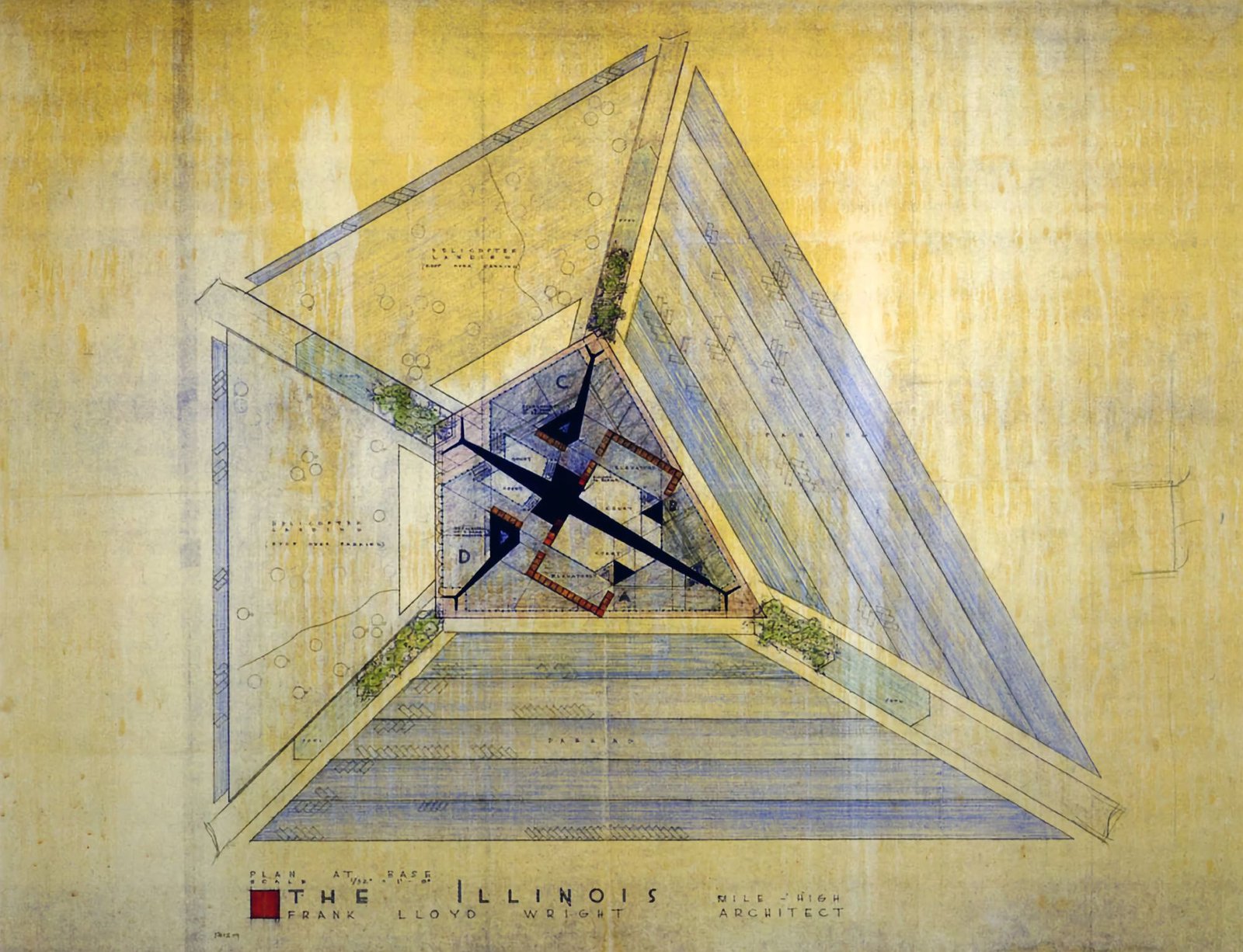
The Illinois would have soared 5,280 feet—spanning 528 stories—towering four times higher than the Empire State Building and twice the height of Dubai’s Burj Khalifa, today’s tallest structure. Its innovative tripod foundation reached deep underground, inspired by the mechanics of trees, with a reinforced concrete core and tensioned steel frame to resist Chicago’s legendary winds. Wright anticipated innovations far ahead of his era: atomic-powered five-floor tandem elevators, helicopter landing decks, and self-contained communities. The design’s influence endures: Adrian Smith, architect behind both the Burj Khalifa and Jeddah Tower, has acknowledged The Illinois as inspiration.
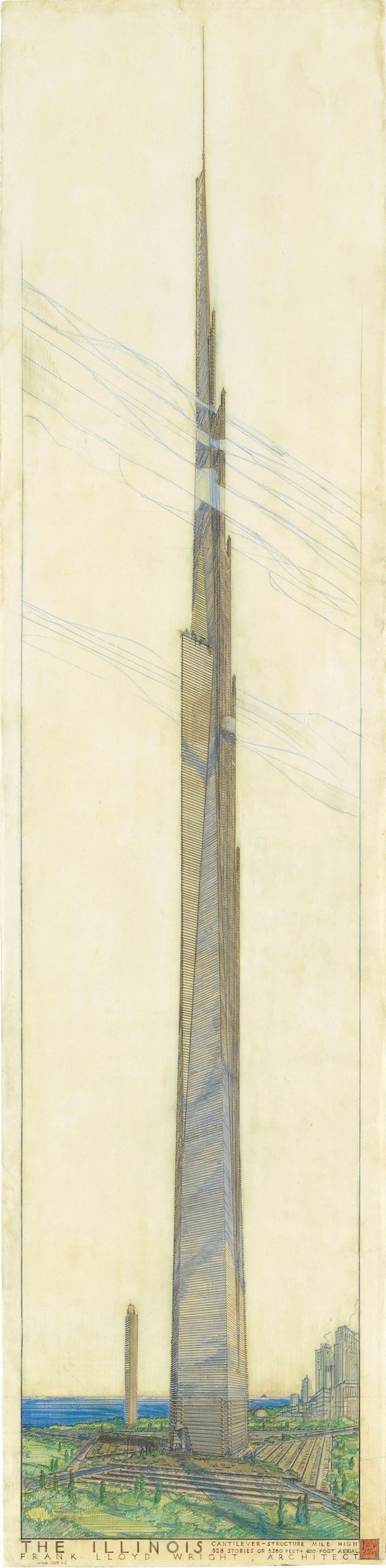
Towers have always been erected by humankind—it seems to gratify humanity’s ambition somehow and they are beautiful and picturesque.
Frank Lloyd Wright, (1956)
Wright’s plan was distinguished not only by scale but by the conviction that verticality could foster flourishing communities—a city in the sky. He envisioned spaces for homes, businesses, recreation, and civic life—bringing light and openness to formerly crowded neighborhoods. Wright’s principles of “tenuity”—strength through slenderness—and “continuity”—the seamless flow from base to summit—were elegantly simple, like the natural grace of a living tree. These ideas quietly underpin today’s supertall buildings, where the integration and sophistication Wright once imagined are finally realized.
Had it been built, The Illinois would have rewritten Chicago’s story, propelling the city centuries forward—a beacon of ingenuity and organic monumentality. Only a year after unveiling the project, Wright would pass away, leaving his greatest skyscraper unbuilt. Genius often arrives unrecognized, and gaps where visionary plans never develop become foundations for future revelation. As each decade’s skyline pushes upward, Wright’s legacy persists—proof that creativity inspires those who follow to keep rising higher.
Renders | David Romero
Drawings | Frank Lloyd Wright




 No products in the cart.